A familiar home can provide comfort for a person living with dementia, but the environment may need to change as memory, judgment, vision, movement, or routines change.
Walk through the home with fresh eyes. Correct immediate dangers first, then build simple cues and consistent routines. The health care team should address clinical questions and sudden changes.
Begin with the whole home
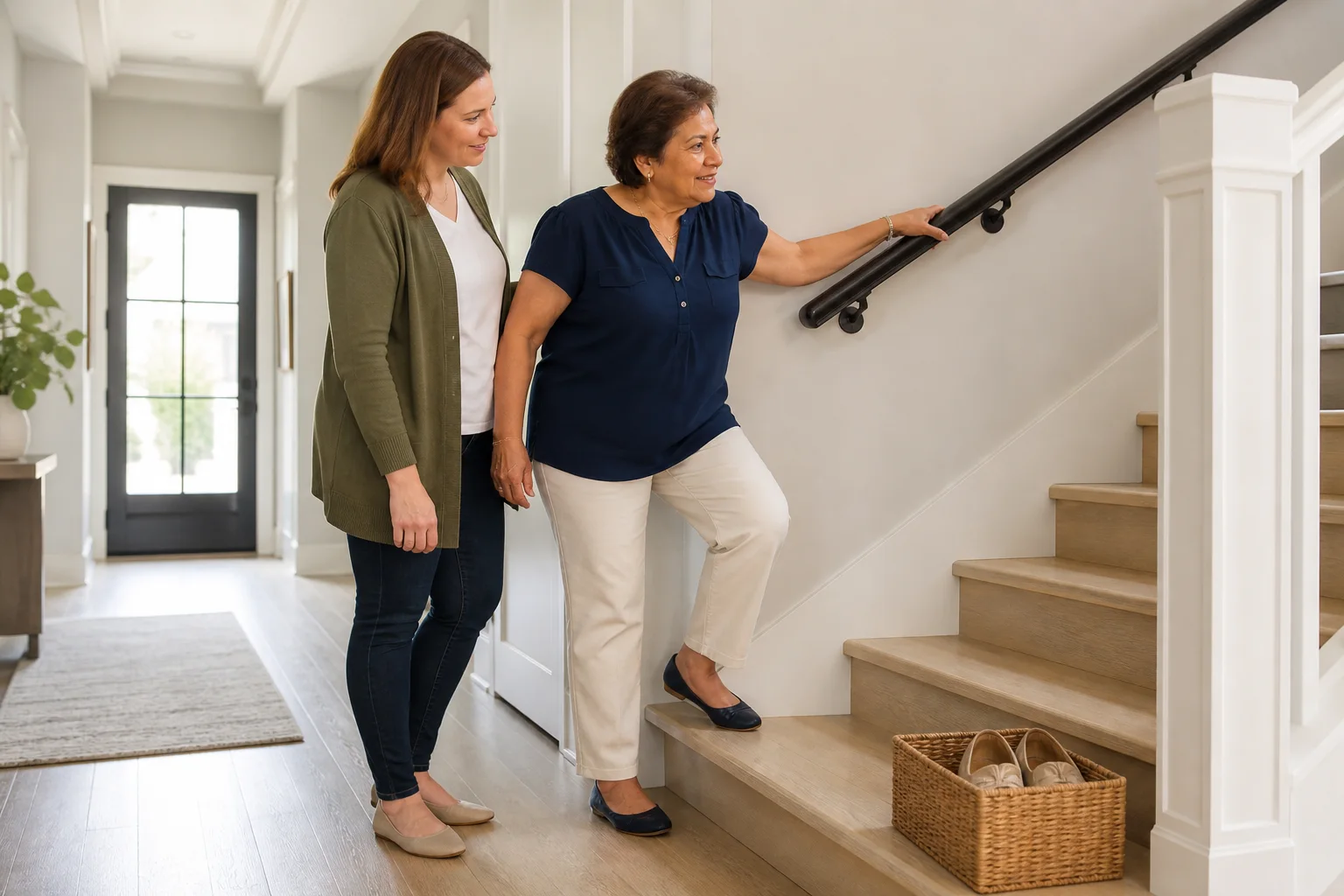
- Improve lighting and add nightlights in halls and bathrooms.
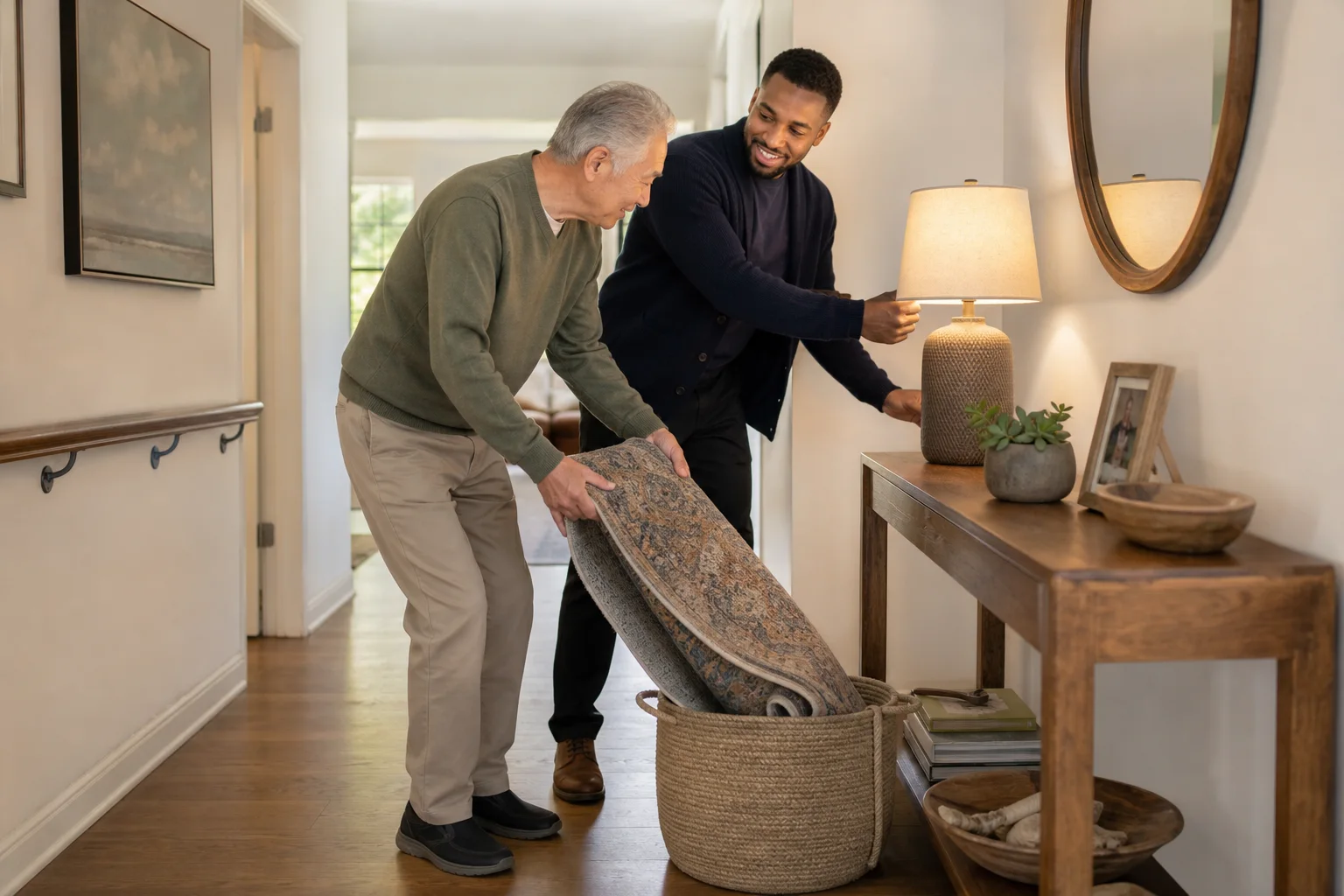
- Clear walkways and remove loose rugs or clutter.
- Check smoke and carbon monoxide detectors.
- Secure medicines, cleaning products, tools, weapons, and other dangerous items.
- Keep emergency contacts and the home address easy to find.
- Use simple labels or pictures when they help with orientation.
Review the kitchen and bathroom
The kitchen combines heat, sharp objects, food safety, and appliances. The bathroom combines water, hard surfaces, and transfers. These rooms deserve special attention.
- Ask the care team whether appliance safety devices are appropriate.
- Check the refrigerator for spoiled food.
- Use grab bars and nonskid surfaces where appropriate.
- Keep water temperature at a safe setting.
- Store personal products safely if they may be mistaken for food.
Use routine as a safety tool
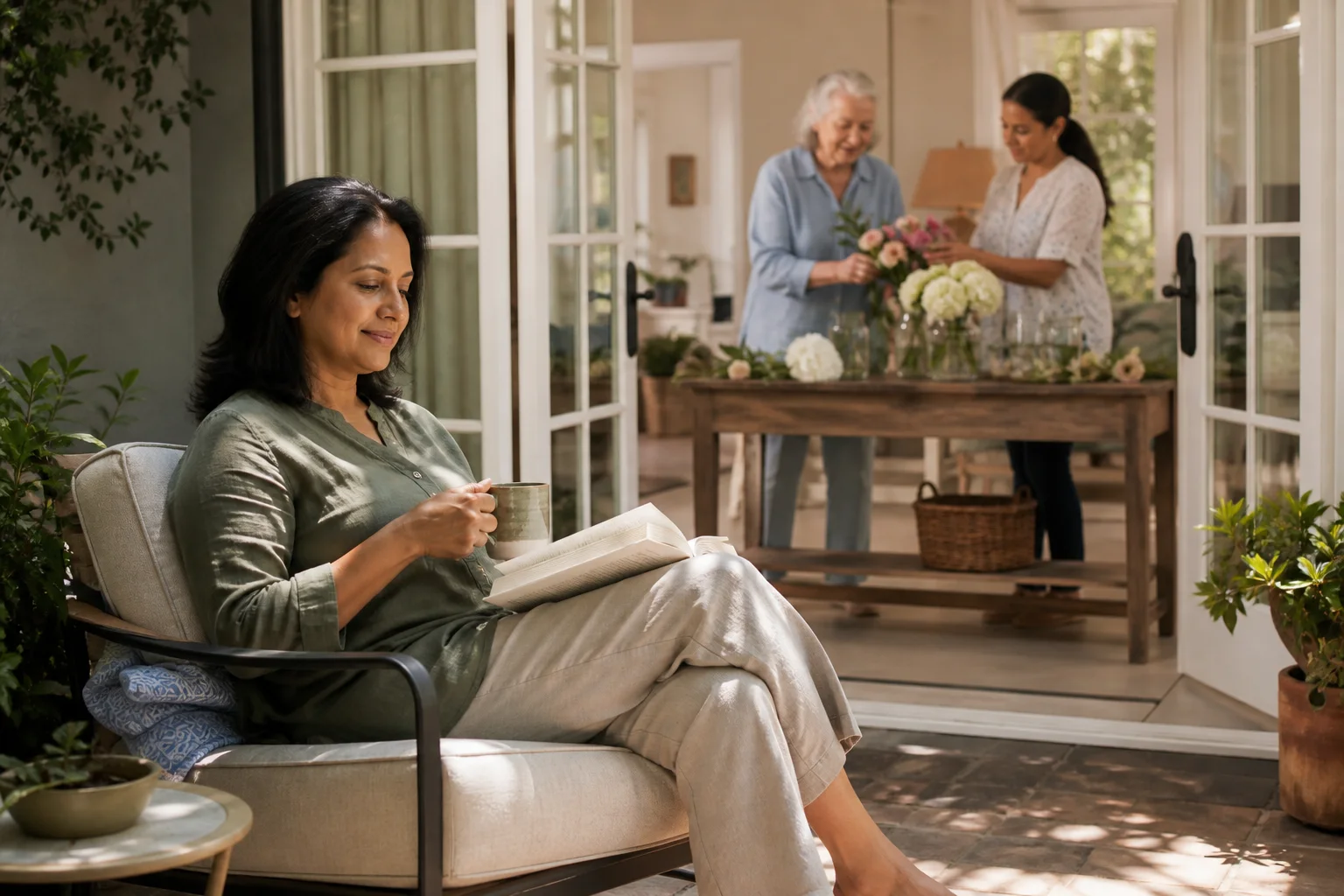
Predictable meals, personal care, activity, and rest can reduce confusion. Keep instructions short, offer one choice at a time, and avoid arguing over a mistaken memory.
Know when to call the health care team
Sudden confusion, a major change in alertness, a new fall, fever, pain, trouble breathing, or other abrupt change should not automatically be attributed to dementia. Contact the appropriate clinician or emergency service.
Common questions
Can a caregiver diagnose dementia?
No. Diagnosis and treatment belong to qualified health care professionals.
What can a nonmedical caregiver do?
A caregiver can support familiar routines, companionship, personal care, meals, household safety awareness, and family communication within the care plan.
Should every suggestion be used immediately?
No. Choose measures that match the person’s current needs and consult the health care team about clinical or mobility concerns.
Sources
Important: This guide provides general educational information. It is not medical, insurance, financial, or legal advice. Contact the appropriate health care providers, insurance carrier, benefit program, or professional advisers for guidance about a specific situation.