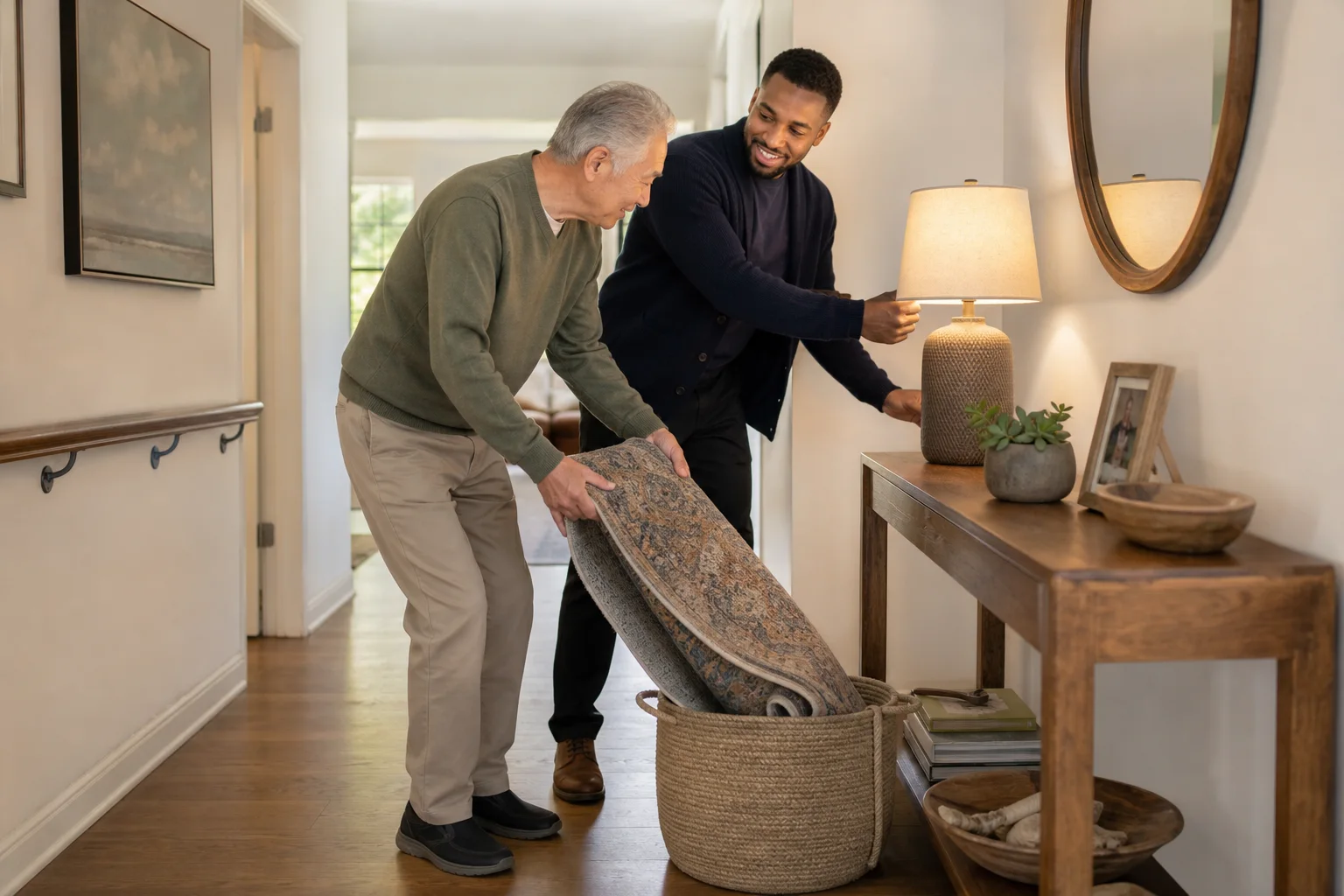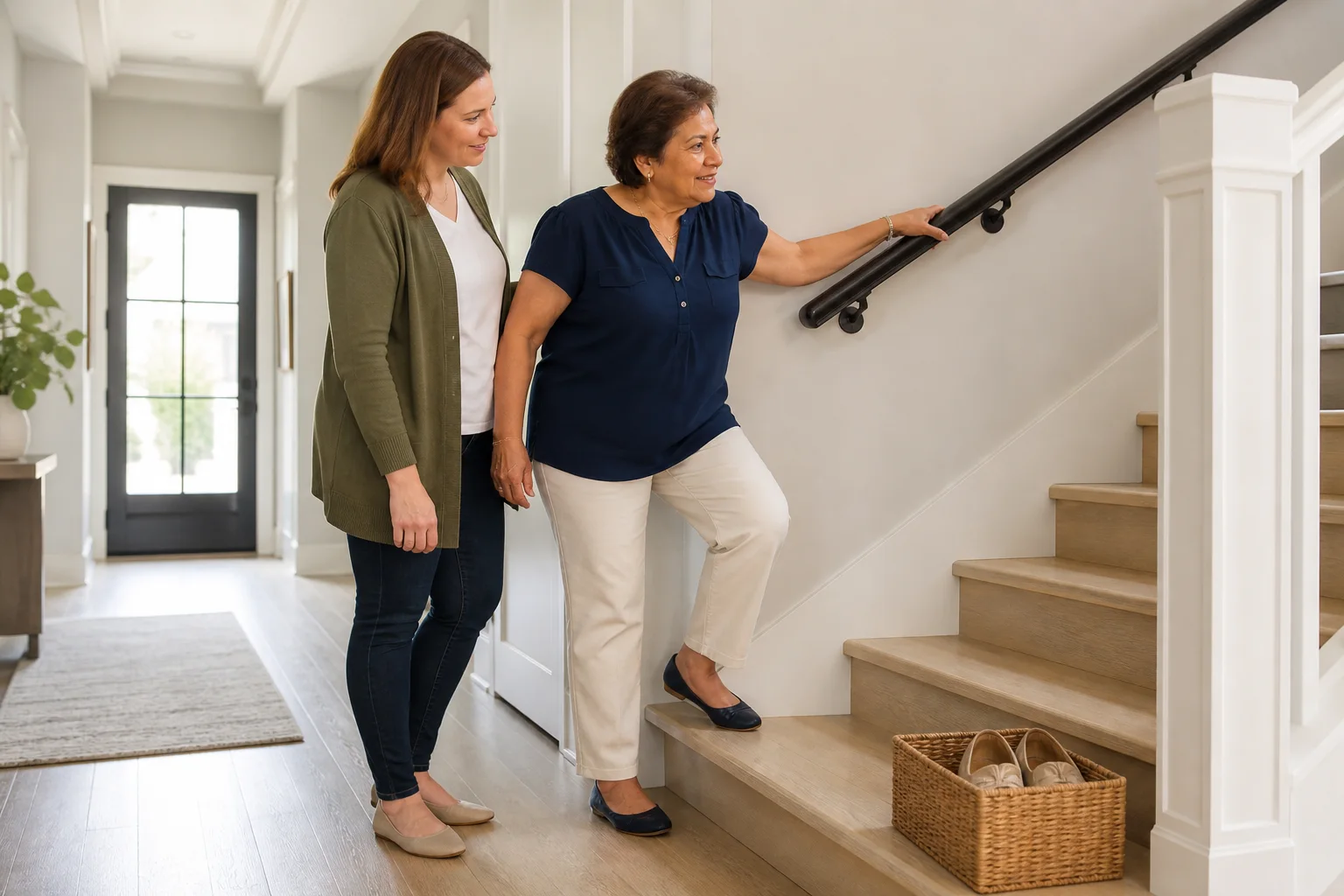
A fall can change confidence as much as mobility. Families can reduce common household hazards and involve the health care team when balance, vision, feet, medications, or new symptoms may be affecting safety.
Fall prevention is not about restricting every activity. It is about making movement safer and helping the person remain as independent as possible.
Walk the home room by room
- Clear clutter and cords from walking paths.
- Remove loose rugs or secure them safely.
- Add brighter lighting and accessible switches.
- Install appropriate bathroom grab bars and nonskid surfaces.
- Use handrails on both sides of stairs when possible.
- Keep frequently used items within easy reach.
Talk with the health care team
Tell a clinician about falls, near falls, dizziness, or fear of falling. Ask for a review of medicines, vision, feet, footwear, strength, and balance. Follow professional guidance for exercise or mobility equipment.
Pay attention to transitions
Many difficulties appear when standing, turning, getting into the shower, rising at night, or moving between surfaces. Notice the exact moment when support is needed rather than treating the entire day as equally risky.
How a caregiver can support the plan
A nonmedical caregiver can keep pathways clear, support the established routine, remain nearby during identified tasks, prepare meals, help with personal care, and communicate observations to the family. Clinical assessment and treatment remain with licensed professionals.
Common questions
Are falls a normal part of aging?
Falls are not inevitable. The CDC recommends discussing risk with health care providers and making the home safer.
Should a family buy mobility equipment without advice?
Ask the appropriate clinician or therapist which equipment fits the person and how it should be used.
What if a fall has already happened?
Seek appropriate medical attention and tell the health care provider. Then review the circumstances and home environment.
Sources
Important: This guide provides general educational information. It is not medical, insurance, financial, or legal advice. Contact the appropriate health care providers, insurance carrier, benefit program, or professional advisers for guidance about a specific situation.